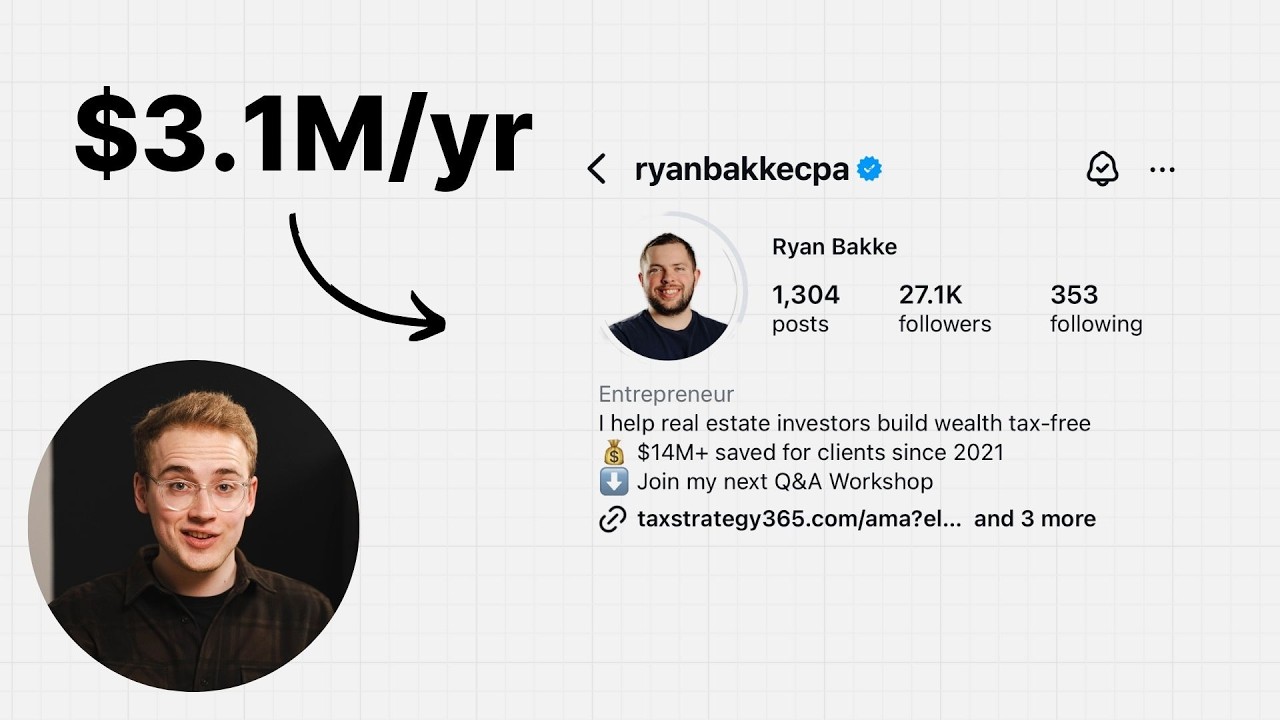
I have been posting video content on Instagram since the summer of 2022. It took me until the summer of 2024 to feel like I actually cracked the code on getting really great clients from social media. Not a ton of views or engagement. Real clients who pay real money for high-ticket services.
When I first started, the advice online was very surface level. Just give, give, give, and ask for nothing in return. So that is what I did. I taught everything I knew about business, social media, and marketing, and I asked for nothing in return.
Here is the problem with that. When I was starting out, I did not know that much. And even today, what I know is nothing compared to so many creators out there. It is easy to get imposter syndrome when you see how far ahead other people are.
But here is what you have to realize. People are not going to buy from you because you know the most. If that were true, everybody would buy from the same three or four people. They are going to buy from the person they have the strongest relationship with. And that is where you can compete.
Show, Do Not Tell
People say this all the time. Every social media guru preaches it. But I want to get specific about what this actually looks like in practice.
Anyone can talk about a sales strategy or a marketing tactic. That is information. But if you actually show behind the scenes of what it looks like, that is different. It stands out. It piques interest. It puts you forward in the viewer’s mind.
Here is an example. I used to do testimonial videos the traditional way. Sit down with a client, do a podcast-style interview, ask them about their experience working with us. That worked fine. But what has been working way better is even simpler. I film my computer screen with my iPhone. I show a real funnel, a real ad strategy, a real client win right there on my display.
Now people are seeing the actual sales pipeline. They are seeing the actual funnel pulled up on my screen. It is not just information about a success story. It is a visualization of it. And that is the key word: visualization. The less your audience has to use their imagination, the better.
My friend Theo, a tax adviser, does this brilliantly. He constantly posts screenshots of the tax return emails he sends clients. Three numbers: what they were going to pay, what they are actually paying, and how much he saved them. He posts five of these in a single day on his Instagram stories. You visit his profile for one day, you see eight of those, and you immediately know Theo is different.
Stop Being Afraid to Sell
I used to believe you needed to build your audience for a long time before you could sell anything. I told myself I would start selling when I hit 5,000 followers, or when I had been doing this for a year. That was a complete misunderstanding of what the value-first approach actually means.
Look at Facebook itself. You see three to four regular posts and then an ad. Then three to four more posts and another ad. Facebook has this figured out. They know exactly how many ads you can show before people get annoyed and leave the platform.
So follow the 20 to 25 percent rule. No more than 20 to 25 percent of your content should be sales-focused. The rest delivers value. If you want to be extra generous, go 90/10.
One way to sell is through ManyChat comment automations, where people comment a keyword and get enrolled into a DM sequence that captures their email. But another way that I really like is selling directly on Instagram Stories.
The Four-Slide Story Selling Framework
Two to three times a week, I show up on my Instagram Stories and sell. With around 14,000 followers, these sales sequences usually get 600 to 1,000 views. Here is the structure I follow every time.
Slide one: Engagement bait. This is purely for the algorithm. Post a meme people will react to, or a poll asking their opinion on something. Instagram rewards engagement on Stories by showing your next slides to more of your followers.
Slide two: Sales hook. Now that you have their attention, direct them to your pitch. Showcase a client win, a feature of your offer, or a transformation in your own business. You are your own best testimonial.
Slide three: Context. You showed them something interesting. They do not fully understand it yet. Now explain. This could be a video of you talking to camera or a photo with text explaining what they are looking at and why it matters.
Slide four: Call to action. Same every time. Something like: if you are interested in installing this into your own system, DM me the word clients and I will personally reach out. No automations. Just me responding to prospects.
Some days I post this sequence and get nothing. Other days, five to ten people book on my sales calendar from conversations that start right there. The key is consistency over time. Eventually you learn which features and angles get the strongest response.
The Takeaway
Between these two practices, showing real results instead of just talking about them, and actually selling consistently in your content, you should start getting better qualified prospects from social media. It has been a massive shift for me. Stop hiding behind pure value content and start treating your social media like the sales tool it actually is.
Frequently Asked Questions
How do I get high-ticket clients from social media content?
Focus on showing real results instead of just talking about concepts. Film your actual computer screen showing funnels, ad dashboards, or client wins. The less your audience has to use their imagination, the more they trust you. Pair this with consistent selling through Instagram Stories two to three times per week using a simple four-slide framework.
What does show dont tell mean for social media content?
Instead of talking about a result or strategy in the abstract, show the actual thing. Film your screen displaying a real sales pipeline, a live funnel, or a screenshot of a client win. Visualization is the key. When your audience can see it with their own eyes, it carries far more weight than just hearing you describe it.
How often should I sell on social media without burning out my audience?
Follow the 20 to 25 percent rule. About one-fifth to one-quarter of your content can be sales-focused while the rest delivers genuine value. Facebook itself runs about one ad for every three to four organic posts. Two to three sales-focused Instagram Story sequences per week is a sustainable cadence for most accounts.
What is the four-slide Instagram Story selling framework?
Slide one is engagement bait like a meme or poll to trigger the algorithm. Slide two is a sales hook showing a client win or feature of your offer. Slide three provides context explaining what they are looking at and why it matters. Slide four is a simple call to action asking people to DM a keyword if they want to learn more. Keep the CTA the same every time so it becomes recognizable to your audience.
Want help scaling your firm?
If you're an accounting firm owner looking to build a predictable client acquisition system, let's talk.
Get in Touch